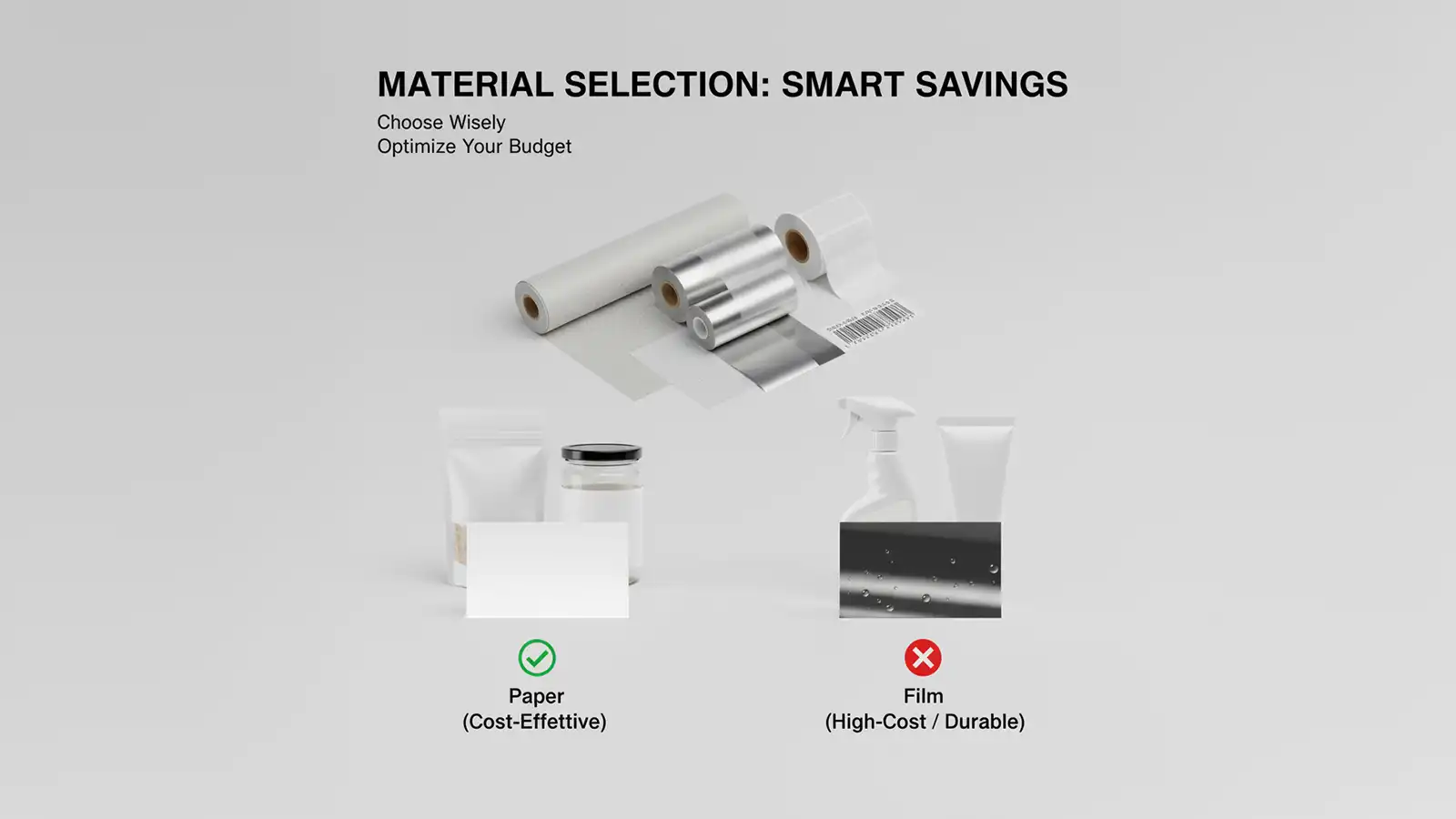
1) Smart Material Selection
“Don’t overdo it” – Material fit for the application
Not every product needs film. For dry and indoor products, coated/vellum paper is sufficient, while water, oil, chemicals, and outdoor conditions require PP/PE/PET film. Correct matching cuts unnecessary costs. Paper or Film?
Liner optimization
With a thin PET liner, more labels fit on the roll; roll changes decrease, line efficiency increases.
2) Design & Printing: Efficiency is in the details
Choose the printing technique based on run length
- Low–medium runs / many SKUs: Digital printing (no plates) is more economical.
- High runs / single SKU: Flexo is superior in unit cost. Digital or Flexo?
Size and shape optimization
Use existing standard dies to avoid special die/shape costs. Simple geometries reduce waste.
3) Ordering & Logistics: Planning means saving
Volume discount: consolidate orders
30,000 every 3 months instead of 10,000 monthly; reduces setup costs and lowers unit price.
Consignment stock / split shipments
If storage/cash is limited; production in bulk, shipment in parts. Price advantage is maintained, cash flow eases.
Quick checklist
- Application profile: water/oil/UV/temperature → right material.
- Digital vs. flexo based on run length.
- Standard die + waste optimization.
- PET liner for line efficiency.
- Bulk deal + consignment option.
Conclusion: Real savings is strategy
Not the cheapest quote, but the properly matched, efficiently produced, and value-adding label delivers real savings. At Kodmark, we optimize costs together in material, technology, and logistics. Let’s analyze your current labels.
Related reads: Digital vs. Flexo · Anatomy of a Label · Surface Energy & Adhesive