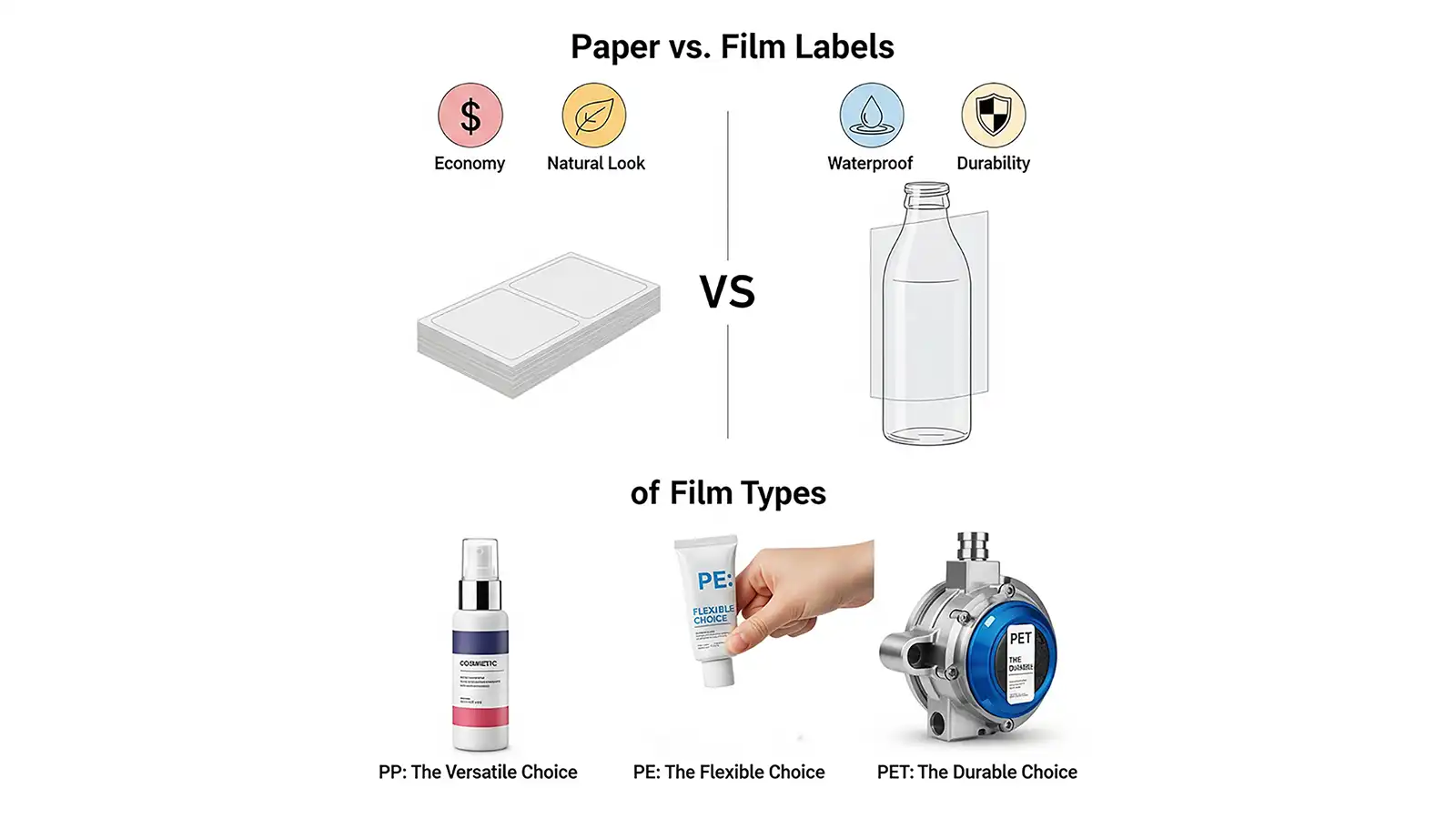
This choice directly affects cost, durability, shelf life, and brand image. At Kodmark, we simplify this decision by exploring the world of paper and film labels, explaining advantages, disadvantages, and the differences between PP, PE, and PET film types.
Paper Labels: Classic, Affordable, and Versatile
Paper labels such as coated, vellum, thermal, or kraft are widely used. Especially suitable in dry environments with aesthetic and cost advantages.
Advantages
- Cost-effective: Generally cheaper than film; ideal for high-volume jobs.
- High print quality: Smooth surface ensures vibrant colors and crisp text.
- Variety: Matte, glossy, textured, or kraft options available.
- Eco-friendly perception: Recyclable and FSC®-certified options exist.
Disadvantage
- Low durability: Sensitive to water, humidity, oil, chemicals, and tearing.
Best use: Dry food packaging, jars, logistics/shipping, retail, and promotional labels.
Film Labels: Symbol of Durability and Modernity
Film labels are made from plastic polymers and excel wherever durability is required.
General Advantages
- Resistance to water/oil/chemicals: Essential in challenging conditions.
- Tear-proof & flexible: Withstands physical impacts and adapts to squeezable packaging.
- Transparent (no-label look): Creates a modern, premium effect.
Best use: Cosmetics (shampoo, cream), beverages, cleaning products, industrial chemicals, automotive, and outdoor use.
Differences Between PP, PE, and PET
1) PP — Versatile Standard
- Features: High transparency, good resistance to moisture/chemicals, solid rigidity (great for auto-labeling).
- When to use: Cosmetics, food, beverages, popular for no-label look.
2) PE — Flexibility Champion
- Features: Softer and more flexible than PP; conforms to packaging.
- When to use: Cream/lotions, squeezable bottles, honey jars.
3) PET — The Most Durable Shield
- Features: Exceptional resistance to high temperatures (≈150°C), chemicals, UV, and abrasion.
- When to use: Electronics, industrial warning labels, automotive parts, long-term outdoor use.
Conclusion: Listen to Your Product’s Needs
- Short shelf life & dry environment & budget focus: Paper is excellent.
- Moisture/chemical contact, flexible packaging, modern appearance: Film is the right choice.
Not sure? Kodmark’s material experts analyze your product, shelf life, and budget to help you decide. Contact us.
Related reads: The Art of Choosing the Right Label · The Anatomy of a Label