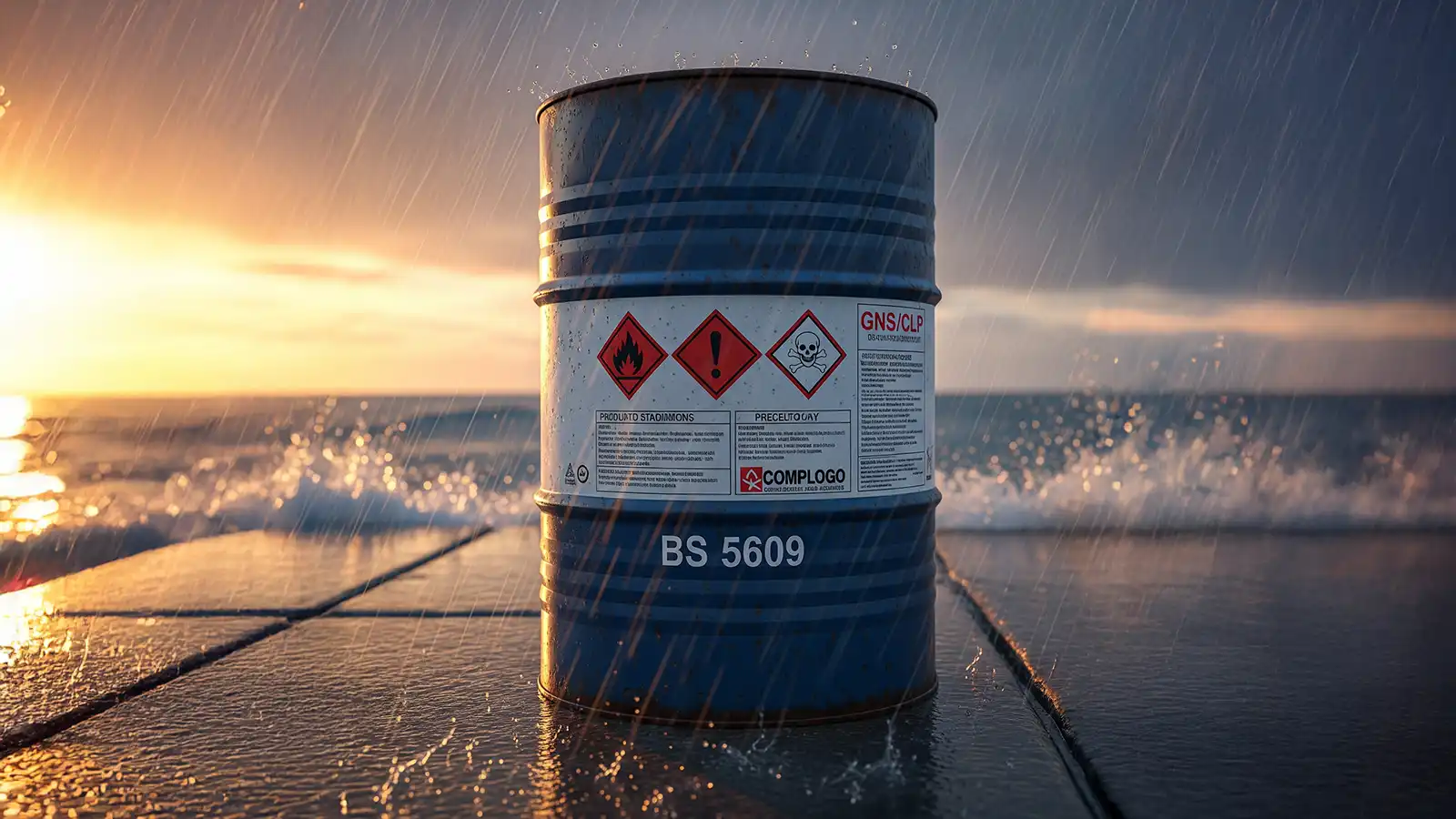
So what do these acronyms mean, and why are they critical? At Kodmark, we explain the two cornerstones of chemical labeling and their importance for your business.
What Are GHS and CLP? The Universal Language of Chemical Communication
In the past, countries had different classification systems and hazard symbols, creating confusion in global trade. To solve this, the Globally Harmonized System (GHS) was developed: a universal framework for the standardized classification of hazards and their communication through labels and Safety Data Sheets (SDS).
CLP is the legal implementation of GHS in the European Union. In Türkiye, it has been adopted as the SEA Regulation (Classification, Labeling, Packaging) by the Ministry of Environment.
What Must a GHS/CLP Label Include?
- Hazard pictograms: Red diamonds (flame, skull, exclamation mark, etc.).
- Signal word: “Danger” or “Warning.”
- H-statements: Hazard statements (e.g., H318).
- P-statements: Precautionary statements (e.g., P280).
- Product identifier & supplier information.
In short, GHS/CLP defines what must appear on the label.
What Is BS 5609? The Endurance Test for Harsh Conditions
You have correctly prepared your GHS/CLP content. But what happens if a chemical drum with its label falls into the ocean? Will it remain legible after weeks of exposure to rain, sun, and saltwater? The answer lies in BS 5609: a durability standard for self-adhesive labels used on hazardous goods transported by sea (recognized by IMDG).
The Two Critical Sections of BS 5609
- Section 2 — Material Test: The unprinted label material and adhesive are immersed in saltwater for three months. Afterward, they must remain intact without peeling.
- Section 3 — Print Test: The printed material that passed Section 2 is tested for abrasion, salt spray, and intense sunlight. All information must stay clear and legible.
In short, BS 5609 defines how durable the label itself must be.
Why Are They Vital Together?
GHS/CLP is the message that tells what to do in an emergency; BS 5609 is the armor that keeps that message readable even in the worst scenarios.
- Legal responsibility: Compliance with national and international regulations prevents penalties.
- Safety: Ensures quick access to accurate information for workers and emergency teams.
- Environmental protection: Preserves critical information for correct response in case of spills or leaks.
- Commercial necessity: Prevents rejection in maritime transport.
How Do We Ensure Durability in Practice?
- Material: Industrial surfaces based on PET/PP/PE films.
- Adhesive: Solvent-based or high-performance acrylic adhesives that bond even to LSE surfaces.
- Printing: Chemical- and UV-resistant ink sets; resin ribbons for variable data.
- Protection: Lamination (mostly PET) or highly durable varnish against abrasion and UV.
Conclusion: Compliance Is Not Optional, It’s a Responsibility
In the chemical industry, labeling is not about aesthetics; it is about safety, compliance, and responsibility. At Kodmark, we don’t just print labels; we provide engineering solutions compliant with GHS/CLP and BS 5609 that withstand the harshest conditions.
Looking for compliant and durable labels for your chemical products? Contact our expert team and minimize risks.
Related reading: Labels for Harsh Conditions · Adhesive Types · Prepress Checklist