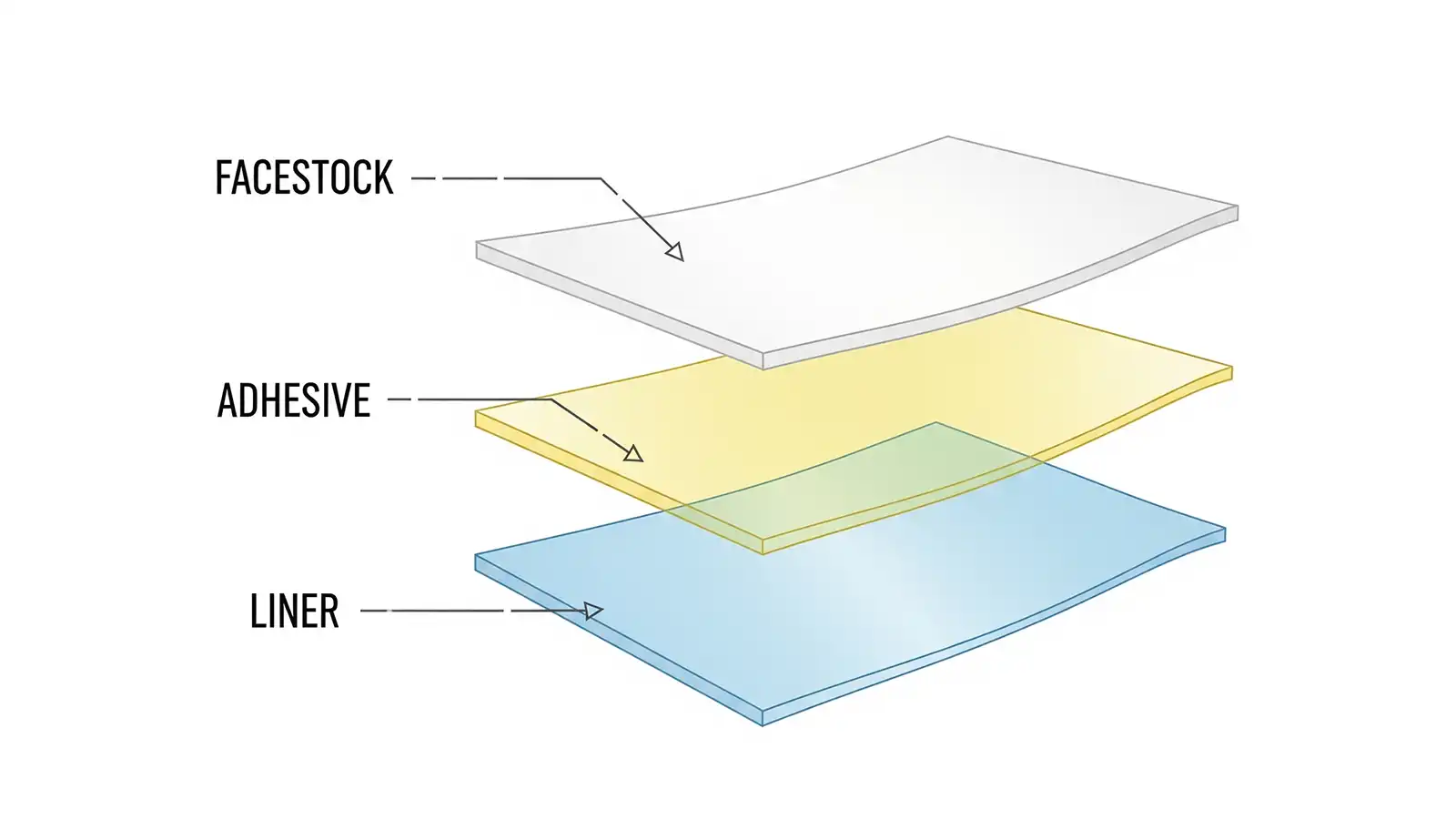
The Three Core Layers
- Facestock: The visible printed surface.
- Adhesive: Bonds the facestock to the product.
- Liner: Protects the adhesive until use.
1. Facestock
Defines visual identity and printability. Choice depends on product conditions.
- Paper-based: Coated/uncoated for dry goods; thermal for barcodes.
- Film-based: PP resistant to water/chemicals; PE flexible; PET durable and heat-resistant.
2. Adhesive
Right choice prevents peeling.
- Acrylic: versatile, UV/temperature resistant.
- Rubber (Hotmelt): strong initial tack.
- Permanent vs. removable.
- Special freezer adhesives.
3. Liner
Protects adhesive and ensures smooth dispensing.
- Paper liner: economical.
- PET liner: smooth, durable, for transparent labels.
Conclusion
A label is the synergy of facestock, adhesive, and liner. Understanding helps in choosing the right solution.
Contact us to find the best option for your product.