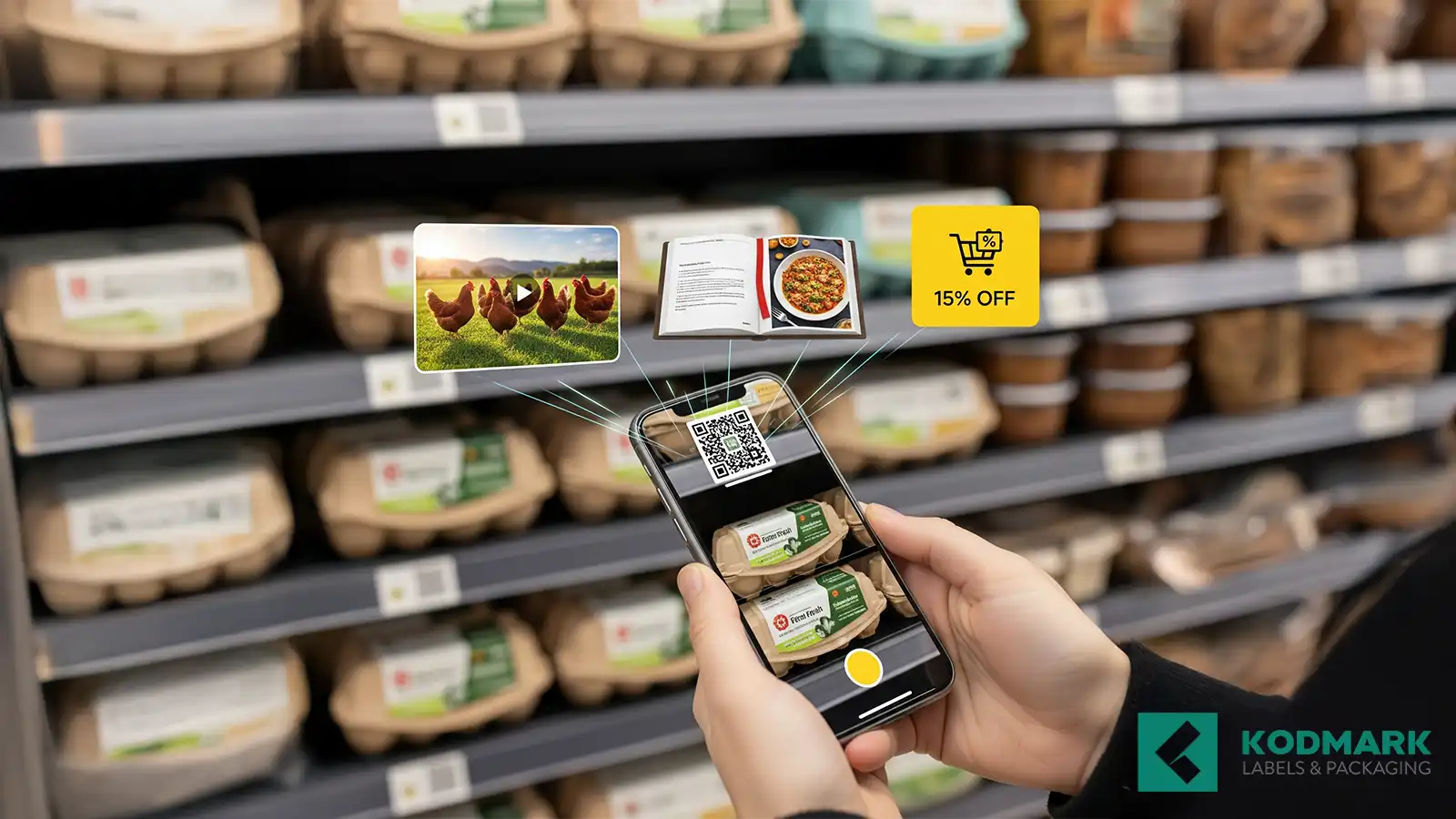
The answer lies in two technologies that break the mold of static labels: QR codes and Augmented Reality (AR). This guide explores how to create interactive packaging and the value it adds to your brand.
The Bridge in Every Pocket: The Comeback of QR Codes
Thanks to native smartphone camera scanning, QR codes have become part of everyday life. A simple square code is the fastest bridge between the physical and digital world.
What Can You Do with QR Labels?
- Product story: From an olive oil bottle to a farm video; transparency and emotional connection.
- User manuals & recipes: Application videos for cosmetics; dozens of recipe pages for sauces.
- Discounts & loyalty: “Scan for 15% off!” CTA for instant conversion.
- Feedback & reviews: Direct link to review/rating pages for social proof.
- Sustainability: Recycling video, carbon footprint information.
Bringing the Experience to Life: Augmented Reality (AR)
While QR codes take the user elsewhere, AR brings digital directly onto the label. When the camera points to the label, 3D animations, videos, and games appear on the screen.
Brand Magic with AR
- Animated characters: The character on the juice box waves from the label.
- Virtual pairings: A wine label shows food matches virtually on the table.
- Interactive mini-games: A quick, fun game from a chips package.
- 3D product information: An animation showing how a vitamin works in the body.
Why Invest in Interactive Packaging?
- Increased engagement: Longer interaction time and stronger connection with the product.
- Valuable data: QR scan analytics; insights by location/time/product.
- Clear differentiation: Interactive packaging stands out among static labels.
- Extended packaging space: Fit unlimited digital content onto a small label.
Technical Requirements: Tips for Success
- High-quality printing: QR and AR triggers must be sharp, error-free, and high contrast. Digital printing ensures variable codes are unique and readable.
- Correct materials/surfaces: Excessively glossy varnish and heavy metallic effects may cause reflection; matte surfaces make scanning easier.
- Content strategy: The landing page must be mobile-friendly; fast loading, clear CTAs, and tracking codes (UTM) are essential.
- VDP infrastructure: Plan a variable data printing workflow for unique codes per product/batch.
Implementation Pattern: Step by Step
- Define the goal: (recipe, discount, education, story).
- Code & content creation: Short URLs, UTM tags, fast-loading landing pages.
- Design integration: Code size/contrast; clear CTA such as “Scan & save 15%”.
- Testing & quality: Scan tests under different light/phones; print proofs.
- Measurement & iteration: Heatmaps of scans and conversion rates for content optimization.
Conclusion: The Label is Just the Beginning
The label is the first step in a long-term dialogue with the consumer. QR and AR transform packaging from a cost item into a measurable marketing channel.
At Kodmark, we provide end-to-end support in high-quality printing, material selection, and VDP/AR integration.
Start your interactive label journey: Contact our expert team.
Related reads: Digital vs Flexo · No-Label Look & Premium Finishes · Color Psychology